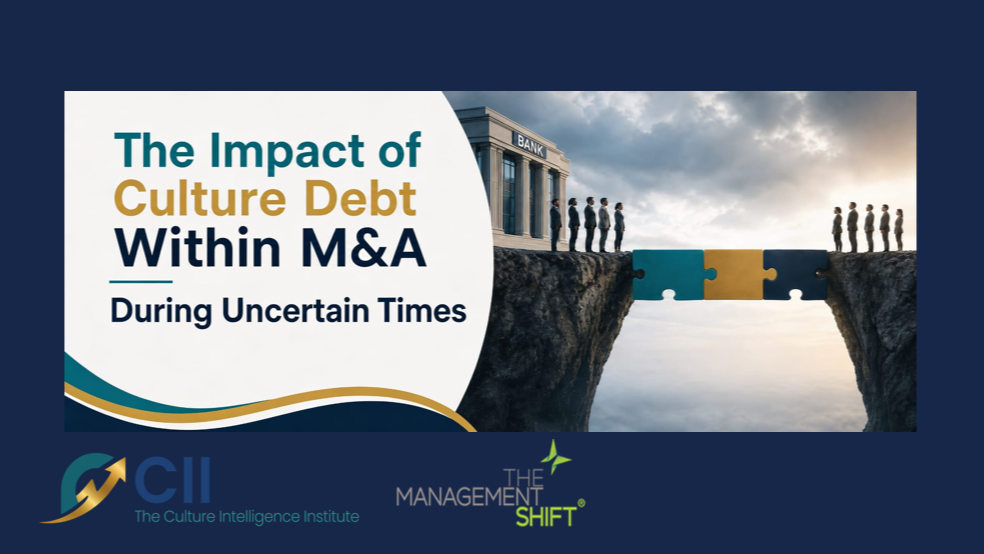
The Impact of Culture Debt Within M&A During Uncertain Times
Culture debt is one of the most expensive liabilities in a deal, especially in uncertain times. When organisations move quickly on financial and operational diligence but underinvest in culture, they often inherit hidden risk: low trust, talent loss, delayed integration, and value leakage that only becomes visible after close.
Culture debt is the accumulation of unresolved cultural misalignment, leadership friction, and unmanaged behavioural differences. In M&A, it builds quietly when leaders assume the people side will “sort itself out” after the transaction. It rarely does. Mercer’s research found that 43% of deals were delayed, terminated, or affected on price by culture issues, while 30% of completed deals failed to meet financial targets for the same reason.
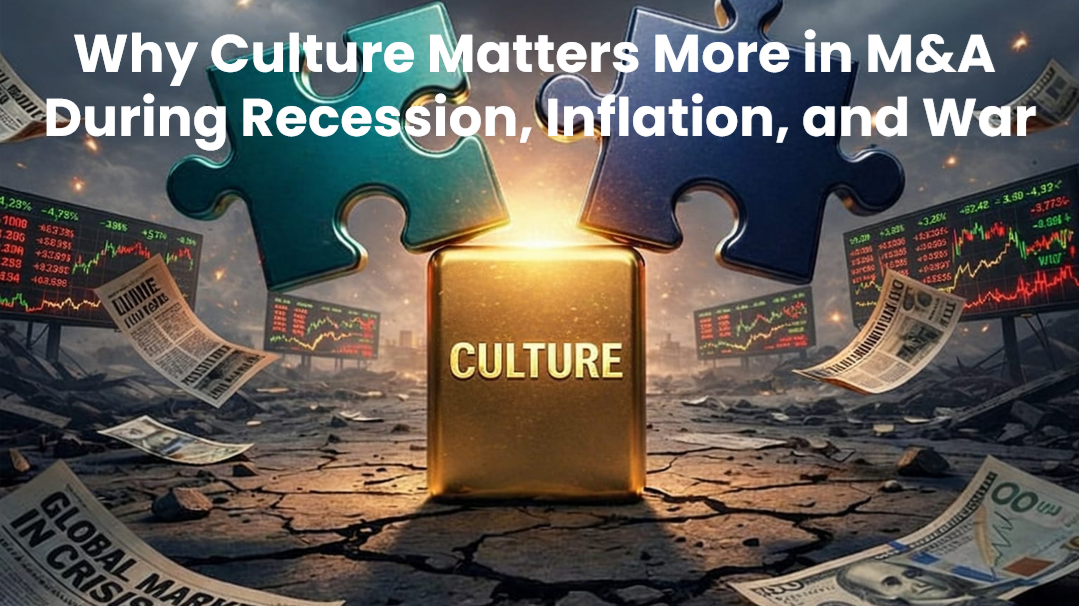
This matters even more in volatile markets. When economic uncertainty, regulatory pressure, or geopolitical disruption intensify, organisations have less room for error. A deal that looks sound on paper can quickly become fragile in practice if the leadership teams do not align on decision rights, pace, communication, and the future operating model.
Table 1 summarises key issues related to culture debt.
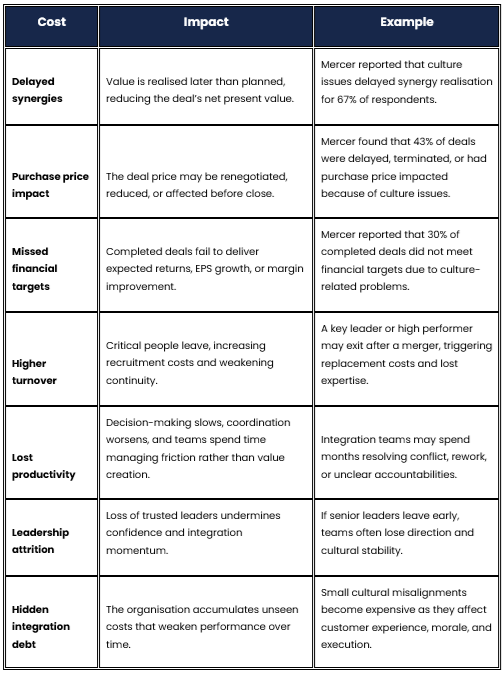
Table 1. Key issues related to culture debt
Why culture debt grows in turbulent times
Turbulent times tend to compress timelines. Boards want speed, investors want certainty, and deal teams often focus on closing first and culture later. That creates the conditions for culture debt to compound: people stay silent, middle management becomes cautious, and legacy silos re-form just when integration needs momentum.
The hidden cost is not only emotional. It is operational and financial. Culture debt can slow decisions, weaken customer confidence, reduce productivity, and drive out high performers who feel uncertain about the future. Over time, those issues erode synergy capture and reduce the strategic value of the transaction.
Why culture diligence is essential
The answer is not to slow every deal down, but to make culture visible early. That is where the
Organisational Health Scan
from the
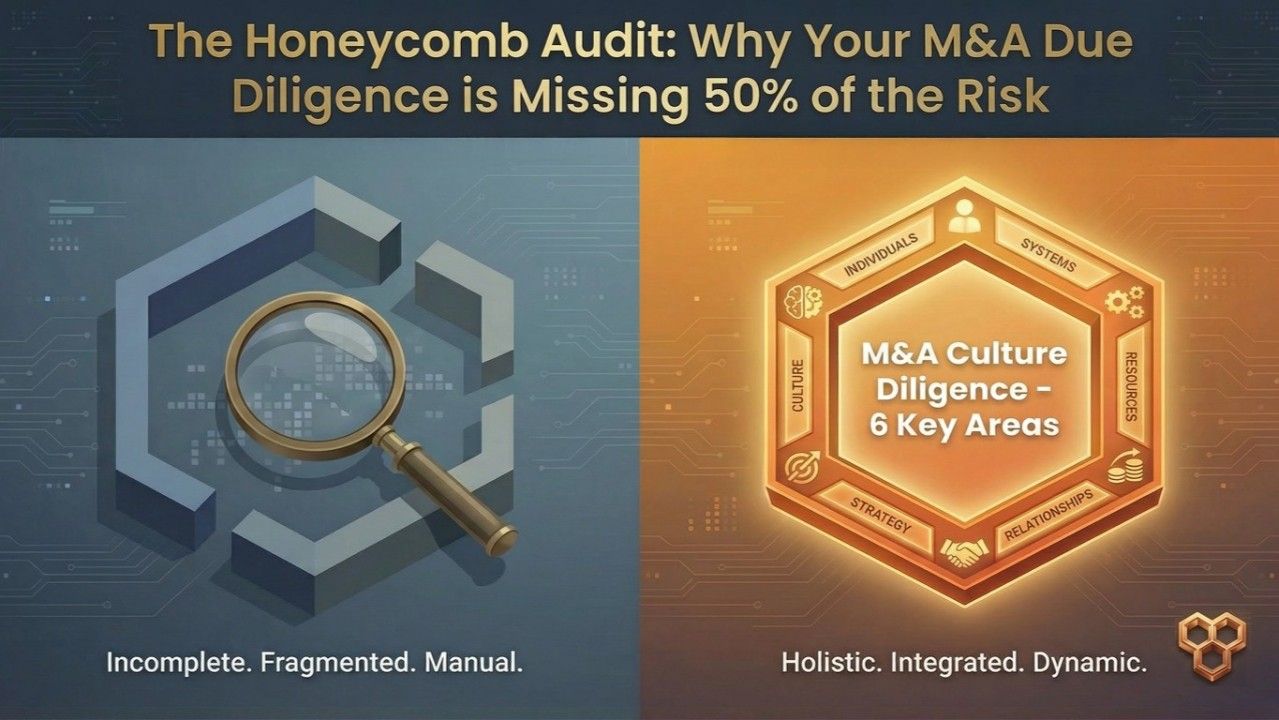
Culture Intelligence Institute becomes valuable. It helps leaders assess how the organisation is functioning across six key value drivers: Culture, Relationships, Individuals, Strategy, Systems, and Resources, turning cultural risk into something measurable and actionable.
Used well, the Organisational Health Scan supports culture diligence by:
- Identifying leadership and cultural misalignments before close.
- Highlighting where trust, clarity, or accountability may break down.
- Showing which areas require immediate integration attention.
- Helping leadership teams prioritise interventions that protect value.
This is especially powerful in M&A because it moves culture from anecdote to evidence. Instead of relying on intuition, leaders get a clearer baseline for integration planning and a more disciplined way to reduce culture debt before it accumulates further.
A strategic lens for boards and investors
At The Culture Intelligence Institute, the focus is on helping investors and leadership teams de-risk growth and transformation through culture intelligence. In M&A, that means treating culture as a value driver, not a soft issue.
That shift in mindset matters. Deals are not only won through valuation and structure; they are won through alignment, trust, and execution. When culture diligence is done properly, organisations can reduce the probability of post-close disruption and improve the odds of capturing the value they set out to create.
From debt to advantage
Culture debt is not inevitable. It is the result of choices: what leaders measure, what they ignore, and how early they intervene. The Organisational Health Scan helps organisations identify what must be protected, what must evolve, and where leadership attention is most urgently needed.
In uncertain times, that discipline becomes a competitive advantage. The organisations that thrive will be those that treat culture not as a by-product of M&A, but as one of its most important assets.
#MergersAndAcquisitions #CultureDebt #CultureDiligence #OrganisationalHealth #PostMergerIntegration #LeadershipAlignment #ValueCreation #ChangeManagement #TheCultureIntelligenceInstitute