The Hidden Cost of Talent Flight in M&A

Vlatka Ariaana Hlupic • March 18, 2026

Post‑deal talent flight is one of the most expensive and least visible forms of value leakage in mergers and acquisitions. In addition to losing salaries and recruitment costs, you also lose:


  • Institutional memory and unwritten know‑how
  • Key customer and partner relationships
  • The very people who could have made the integration work


On paper, the deal model assumes that critical people will stay, cooperate and go above and beyond to deliver synergies. Uncertainty, culture clash and opaque decision‑making often erode trust within weeks of signing.


The question is not “Will some people leave?”, that is inevitable. The real question is: “Are we losing the people we can afford to lose, or the ones our investment thesis depends on?”


Why Traditional Diligence Misses Talent Risk

Conventional financial, legal and commercial diligence is backward‑looking. It tells you what the company has done, not whether its people are willing and able to deliver what you now expect of them.


Even sophisticated AI‑enabled due diligence is largely trained on historic data: financials, contracts, emails, KPIs. It cannot see:

  • Emerging disengagement and burnout
  • Erosion of trust in leadership
  • Culture clash between acquirer and target
  • Informal power structures and key‑person dependency


By the time these issues show up in missed milestones and attrition reports, your best people may already be in advanced conversations with competitors.


How the Organisational Health Scan (OHS) Exposes Talent Flight Risk


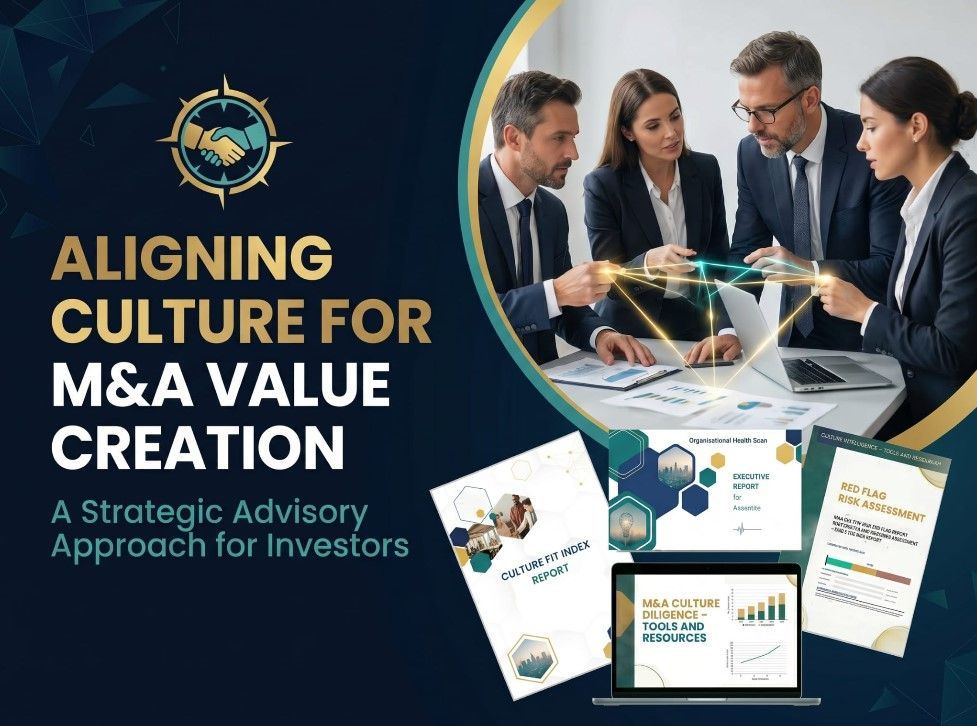
The Organisational Health Scan (OHS) from the Culture Intelligence Institute was designed precisely to quantify the human side of execution capacity, including talent flight risk, before it hits the P&L.


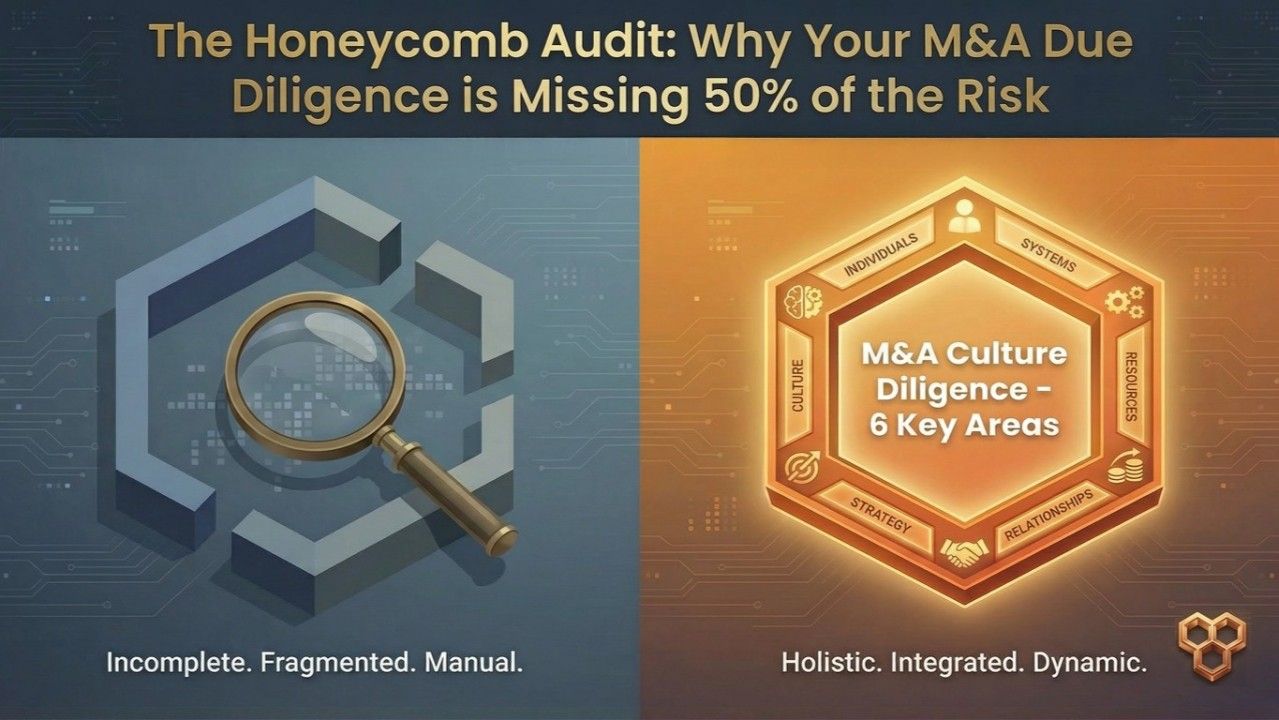
In around 20 minutes per participant, OHS anonymously collects quantitative and qualitative input across six critical value drivers: Culture, Relationships, Individuals, Strategy, Systems and Resources.


From this, leadership gets:

  • An Executive Report with key hidden strengths and weaknesses withing six value drivers
  • A clear Culture Fit Index between acquirer and target
  • Insight into leadership alignment and trust levels
  • Signals of engagement and discretionary effort (are people still willing to “go the extra mile”?)
  • A prioritised roadmap of interventions that directly target the conditions driving talent flight.


Instead of vague statements like “morale seems low,” you see precisely where, why and how your culture is putting critical people at risk.


From Data to Culture Integration: Stopping Talent Flight Before It Starts

Data alone does not keep people. What matters is how fast and how credibly leaders respond.


Used properly, OHS becomes the engine of a practical culture integration plan that stabilises key talent:


  1. Early transparency: OHS results give leaders the evidence to address employee concerns openly: “Here is what you told us. Here is what we are going to do about it.”
  2. Targeted leadership action: Rather than generic “engagement initiatives,” you focus on specific levers highlighted by OHS. For example, decision‑making bottlenecks in one function, lack of role clarity in another, or toxic micro‑cultures in particular locations.
  3. Protecting critical teams and roles: Where OHS reveals key‑person dependency or low trust in vital teams, you can design focused retention and succession strategies before the head-hunter calls.
  4. Aligning systems and expectations: Many post‑deal frustrations come from misaligned processes and mismatched expectations. OHS highlights where systems and resources are undermining people’s ability to succeed in the new organisation.


The result is not an abstract “culture programme,” but a concrete integration roadmap that employees recognise as responsive to their lived reality.


Why Talent Flight is a Board‑Level Risk, Not an HR Issue


In M&A, talent flight is not just a human resources problem; it is a direct threat to:


  • Synergy realisation
  • Customer retention
  • Innovation pipeline
  • Integration timelines
  • Ultimately, IRR and exit valuation


Boards and investment committees increasingly understand that culture and talent stability are execution variables, not soft factors. Tools such as the Organisational Health Scan translate this into board‑ready data and concrete action plans.

If your deal thesis assumes that people will stay, adapt and perform, you need to measure whether the environment you have created makes that assumption realistic.


If you would like to explore how the Organisational Health Scan can help de‑risk talent flight in a current or upcoming transaction, Please click here to learn more.
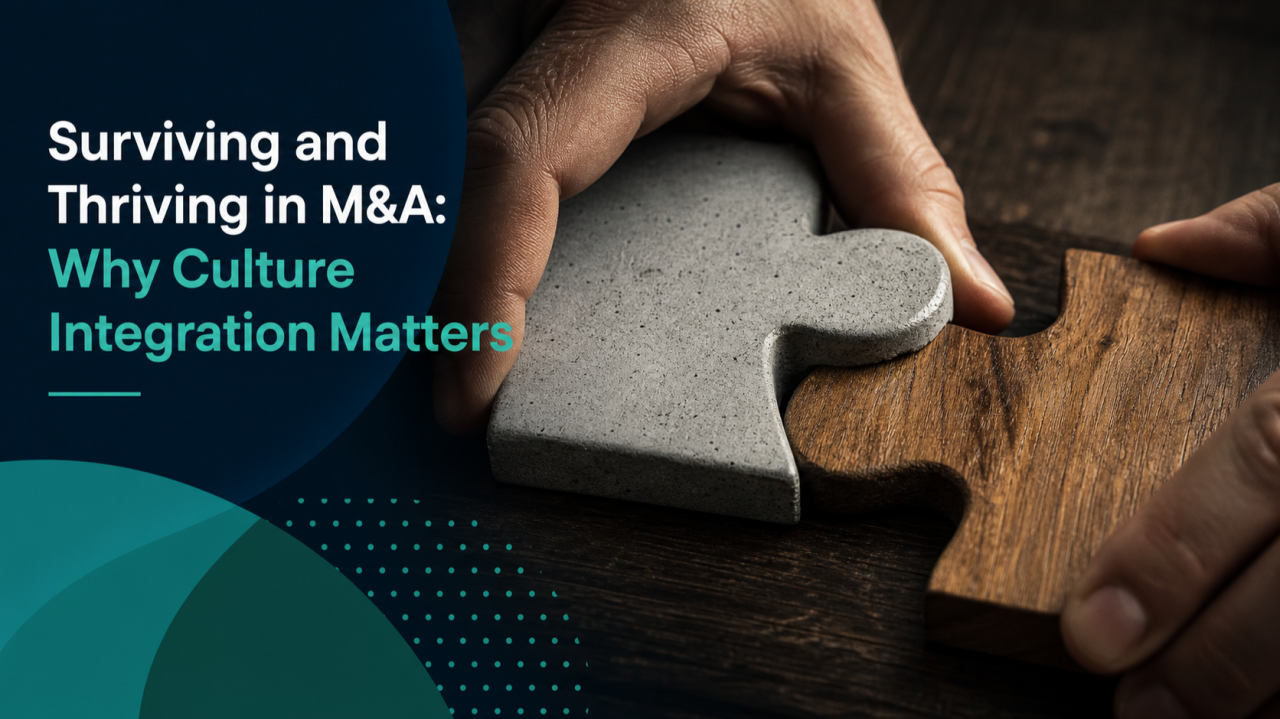
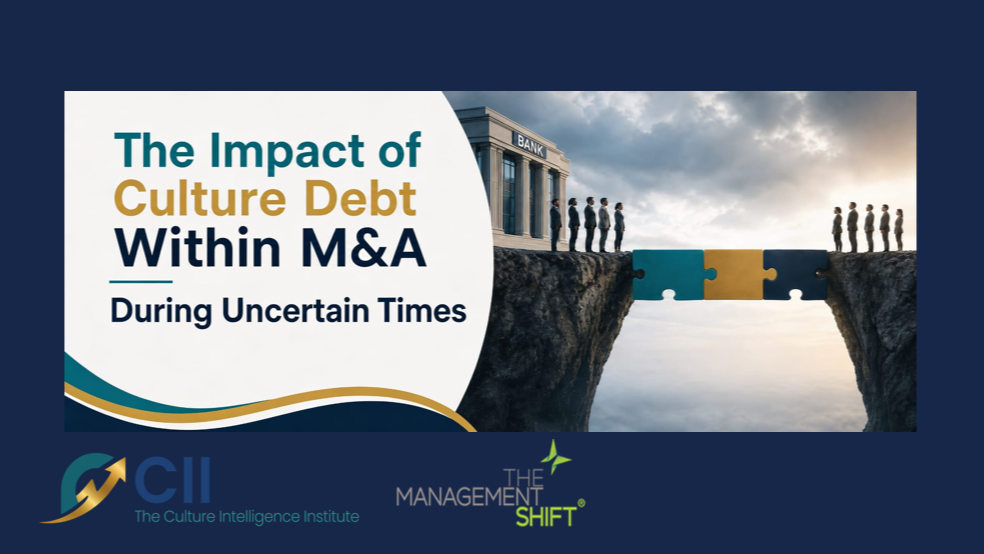
The Honeycomb Audit: Why Your M&A Due Diligence is Missing 50% of the Risk
By Vlatka Ariaana Hlupic April 1, 2026
The Honeycomb Audit: Why Your M&A Due Diligence is Missing 50% of the Risk
By Vlatka Ariaana Hlupic March 29, 2026
For years, PE value creation has focused on financial engineering, cost optimisation and commercial synergies. But in platform and add‑on strategies, the real execution risk sits in one place: how people decide, collaborate and lead once the deal closes. That is culture, and it can be measured, managed and scaled. At the Culture Intelligence Institute, we work with investors to turn culture from a one‑off, anecdotal observation into a standardised, repeatable diligence process that can be applied to every platform and every bolt‑on. Step 1: A Standard Culture Diligence Spine for Every Deal Instead of reinventing the wheel, leading PE firms are supported by the same core culture diligence sequence on each transaction: Rapid leadership and culture hypothesis based on the investment thesis Organisat ional Health Scan (OHS) deployed as a 20‑minute, zero‑disruption diagnostic Structured interviews and “human risk” review integrated into the IC pack The Organisational Health Scan quantifies what we call Culture Capital: the real, human execution capacity of the business across six predictive value drivers and indicators of M&A success: Culture, Relationships, Individuals, Strategy, Systems and Resources. That means every deal benefits from comparable data, not just gut feel. You can learn more about the OHS approach here: https://www.managementshiftsolutions.com/OHSScan and about our broader culture diligence work at: https://www.cultureintelligenceinstitute.com Step 2: Using OHS Data to Choose: Integrate, Federate or Leave Autonomous Once culture and leadership are measured, the core integration question becomes strategic: Is this an asset we fully integrate, federate, or deliberately keep autonomous? Integrate: When OHS shows high alignment on strategy, decision‑making and trust, it may be safe to move quickly to a common operating model and systems. Federate: When the target has a strong Level 4 culture (high trust, collaboration, innovation) that the platform lacks, the right move is often to preserve and learn from it, not to standardise it away. Autonomous: When the target’s value comes from a distinct niche, brand or culture, OHS data often supports a “light‑touch” integration, with shared governance but minimal cultural interference. Because the OHS provides both quantitative scores and deep qualitative feedback, deal teams can defend these choices in IC discussions, rather than arguing from intuition alone. Further explanation of these integration strategies is shown in Figure 1 below. Step 3: Case‑Style Narratives: How Early Culture Diagnostics Change Outcomes Across the portfolio, a repeatable culture diligence playbook enables investors to: Spot Execution Friction before it hits EBITDA: low trust between functions, leadership misalignment, toxic subcultures, change fatigue. Protect and scale Level 4/5 pockets (using The Management Shift framework) instead of suffocating them under Level 3 bureaucracy. Build a differentiated exit story : not just financial performance, but a demonstrably stronger, more scalable organisational operating system.  For example, we have seen early OHS insights lead investors to: Adjust integration speed and sequencing, preventing the loss of a high‑performing team. Change the planned leadership structure when data showed a hidden “culture carrier” critical to execution. Reframe the value creation plan around trust, collaboration and psychological safety metrics that buyers later viewed as major de‑risking factors. In each case, culture diligence did not replace traditional PE rigour; it made it repeatable and safer, deal after deal. Integration options grounded in OHS data
When Spreadsheets Fail: Protecting Level 4 Mindset from Level 3 Bureaucracy in M&A
By Vlatka Hlupic March 23, 2026
When Spreadsheets Fail: Protecting Level 4 Mindset from Level 3 Bureaucracy in M&A
The Culture Capital Equation: Combining Quantitative Data with Executive Intuition
By Vlatka Hlupic March 10, 2026
Most mergers and acquisitions look flawless on a spreadsheet, yet they frequently underperform in the hallway. They treat the organisational operating system as a measurable, highly valuable asset. We call this Culture Capital.
Diagram: Culture Capital Multiplier, shows a process to engineer top quartile M&A returns in 100 days.
By Vlatka Hlupic March 2, 2026
Culture Capital Multiplier
By Professor Vlatka Ariaana Hlupic February 26, 2026
(c) 2026 Management Shift Solutions
By Professor Vlatka Ariaana Hlupic February 23, 2026
(c) 2026 Management Shift Solutions
Diagram showing
By Professor Vlatka Ariaana Hlupic February 3, 2026
The 5 Levels of The Management Shift: A Practical Framework for Culture Diligence in M&A
By Professor Vlatka Ariaana Hlupic January 15, 2026
(c) 2026 Management Shift Solutions
Executive report cover OHS scan CII
By Professor Vlatka Ariaana Hlupic December 1, 2025
(c) 2026 Management Shift Solutions