The Information Architecture of Culture Diligence: Quantifying M&A ROI through Advanced Analytics
(c) 2026 Management Shift Solutions
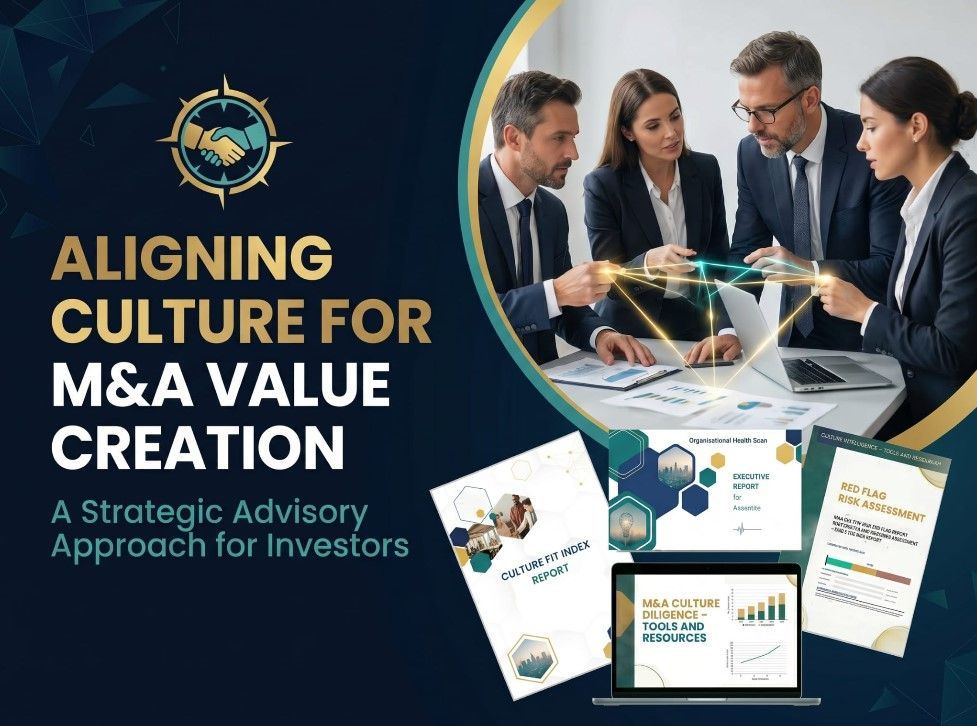
Most M&A due diligence still treats culture as a soft, qualitative side‑note, even though it is one of the biggest drivers of deal success or failure. The Organisational Health Scan from the Culture Intelligence Institute was built precisely to change that, by turning culture into hard data that can be modelled, tracked and linked to ROI.
A 20+ year research backbone
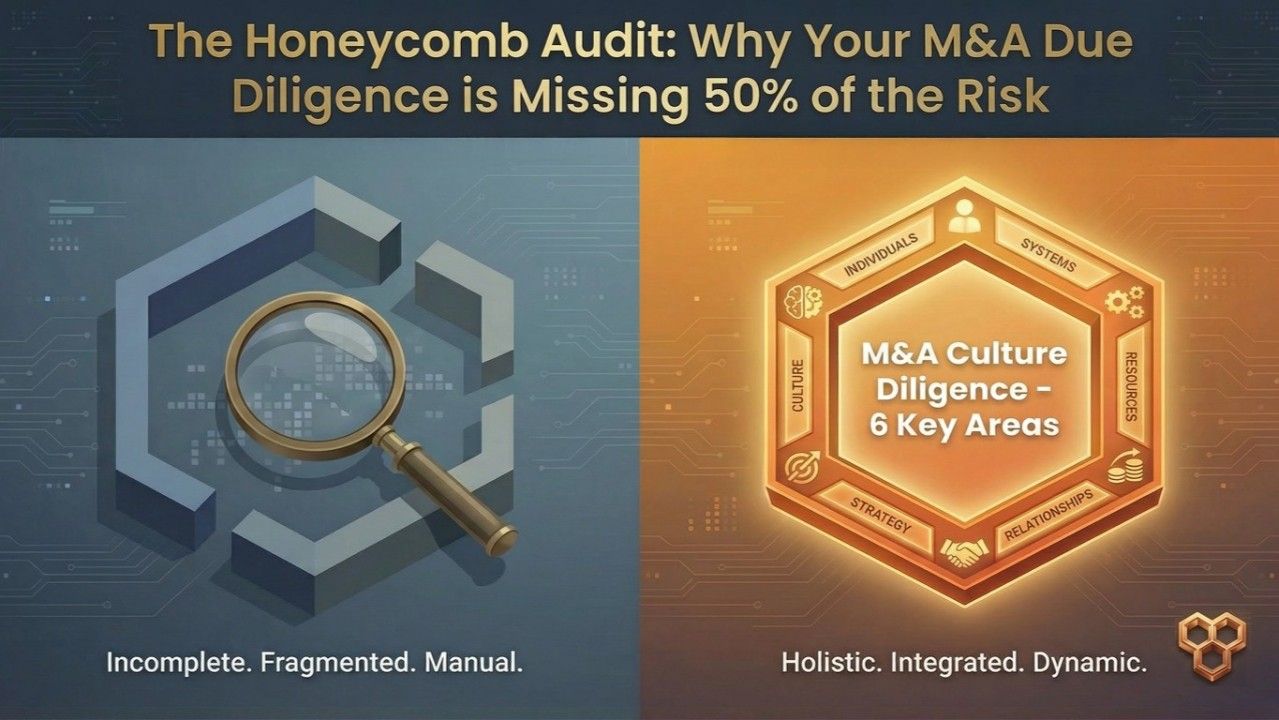
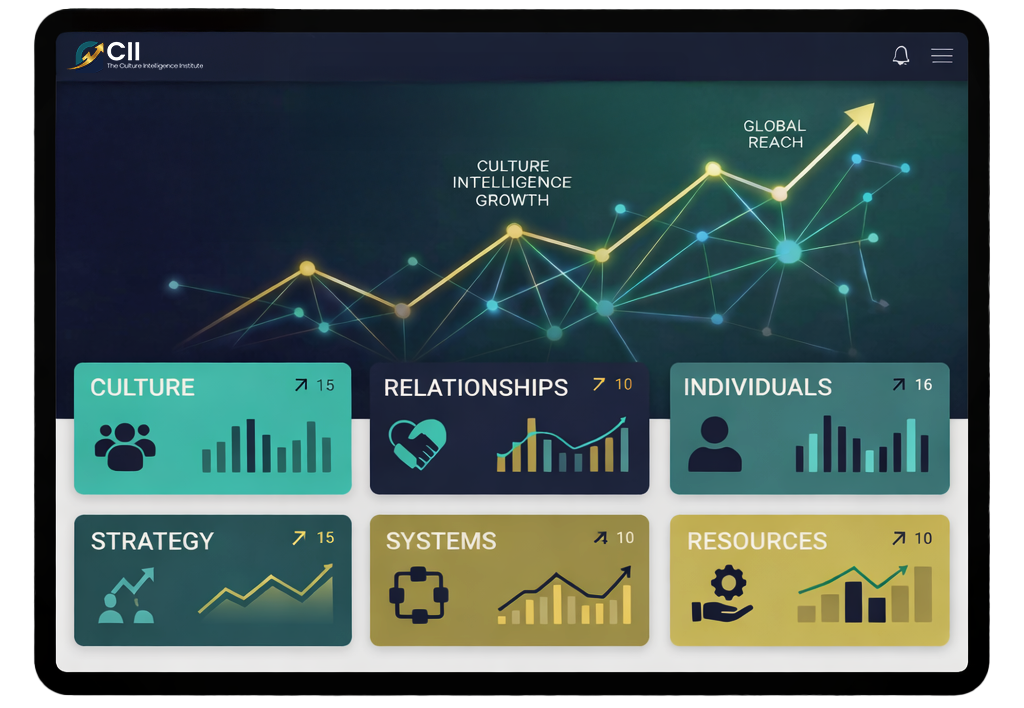
The Organisational Health Scan stands on more than two decades of empirical and theoretical research into what really drives value creation in organisations. Its foundation is the 6 Box Leadership framework, developed through over 15 years of research using rigorous thematic analysis and coding of qualitative data to identify 130 factors, later expanded to 150, that influence performance, engagement and profit across six core areas: Culture, Relationships, Individuals, Strategy, Systems and Resources.
This work did not emerge from consulting anecdotes; it was led by myself (a PhD computer scientist by training) bringing scientific discipline to model building, factor refinement and validation. The result is an evidence‑based architecture that links everyday organisational realities to value creation, not a collection of buzzwords.
From theory to a robust diagnostic engine
The diagnostic tool that underpins the Organisational Health Scan went through a multi‑stage development and validation process:
- Initial online questionnaire (105 questions) built directly on the empirically derived 6 Box framework.
- Empirical testing in 20+ organisations globally to examine how items performed in real settings.
- Refinement to a final framework of 150 value‑creation factors and a 120‑item questionnaire, following further thematic analysis, coding and testing.
- Statistical analysis of the growing data set to demonstrate reliability of the questionnaire.
This process mirrors the development of robust psychometric instruments: iterative design, field testing, factor refinement and reliability testing, rather than jumping straight from theory to product.
Enterprise‑grade information architecture
What distinguishes the Organisational Health Scan as an “information architecture” for culture diligence is not only the underlying models, but the way data is captured and handled.
A bespoke software platform was designed and built to operationalise the 120‑item diagnostic. The technical design was led by a blue‑chip information architect Rod Willis FRSA MIET with 30+ years of experience, ensuring:
- Scalable, anonymous and concurrent data collection from hundreds or thousands of employees.
- Clean data structures that support advanced analytics, benchmarking and longitudinal tracking.
- Flexible mapping layers so the same data set can be analysed through different strategic lenses and segmenting of reports (for example per department, geographical location or managerial level).
This is not a simple survey tool; it is a purpose‑built data architecture for assessment of culture and organisational health.
Culture diligence as an analytics discipline
In an M&A context, this architecture allows culture diligence to be treated with the same analytical rigour as financial or commercial diligence:
- A 120‑item instrument grounded in 150 empirically derived drivers of value.
- Quantified indicators such as Culture Fit Index, risk levels and leadership alignment scores.
- Correlation structures that connect specific cultural and systemic factors to performance and value creation.
- Repeatable measurement that can be used pre‑deal, during integration and post‑deal to track progress and ROI.
Instead of relying on interviews, anecdotes and generic “culture surveys”, deal teams gain a quantified, comparable view of the organisational conditions that will either enable or block the investment thesis.
Quantifying M&A ROI through culture data
The real power of this information architecture appears when culture data is linked to M&A outcomes:
- Pre‑deal, the Scan exposes culture and leadership risks that could erode synergies, derail integration or trigger key‑talent loss.
- During integration, it identifies where to focus interventions (e.g. decision‑making, collaboration, empowerment, systems or resources) to protect and unlock value.
- Over time, in post-deal phase, repeated scans facilitate culture integration and allow investors and boards to observe how shifts in culture and organisational health correlate with financial and operational performance, enabling a clearer line of sight from culture interventions to M&A ROI.
In other words, culture diligence becomes a data asset: structured, validated and analytically rich enough to feed into risk models, scenario planning and value‑creation plans.
Moving from opinion to engineered insight
The Organisational Health Scan is best understood as an engineered insight system for culture:
- Grounded in 20+ years of research and a codified 6‑box framework by PhD computer scientist.
- Built with a strong methodological backbone.
- Architected by a blue‑chip information architect for scale, integrity and advanced analytics.
For investors, boards and M&A advisors, this means culture can finally move out of the realm of opinion and into a measurable, repeatable, decision‑grade input. That is the essence of the information architecture of culture diligence, and the key to quantifying M&A ROI through advanced analytics, not just intuition.